Scopri · Capoterra
History
From the Neolithic to Sardinia's first railway: three thousand years of history.
Capoterra has a long and discontinuous history. Inhabited since the Neolithic, destroyed in 1355, left completely uninhabited for three centuries, refounded in 1655 with seven families. Every layer has left traces on the land.
Cronologia
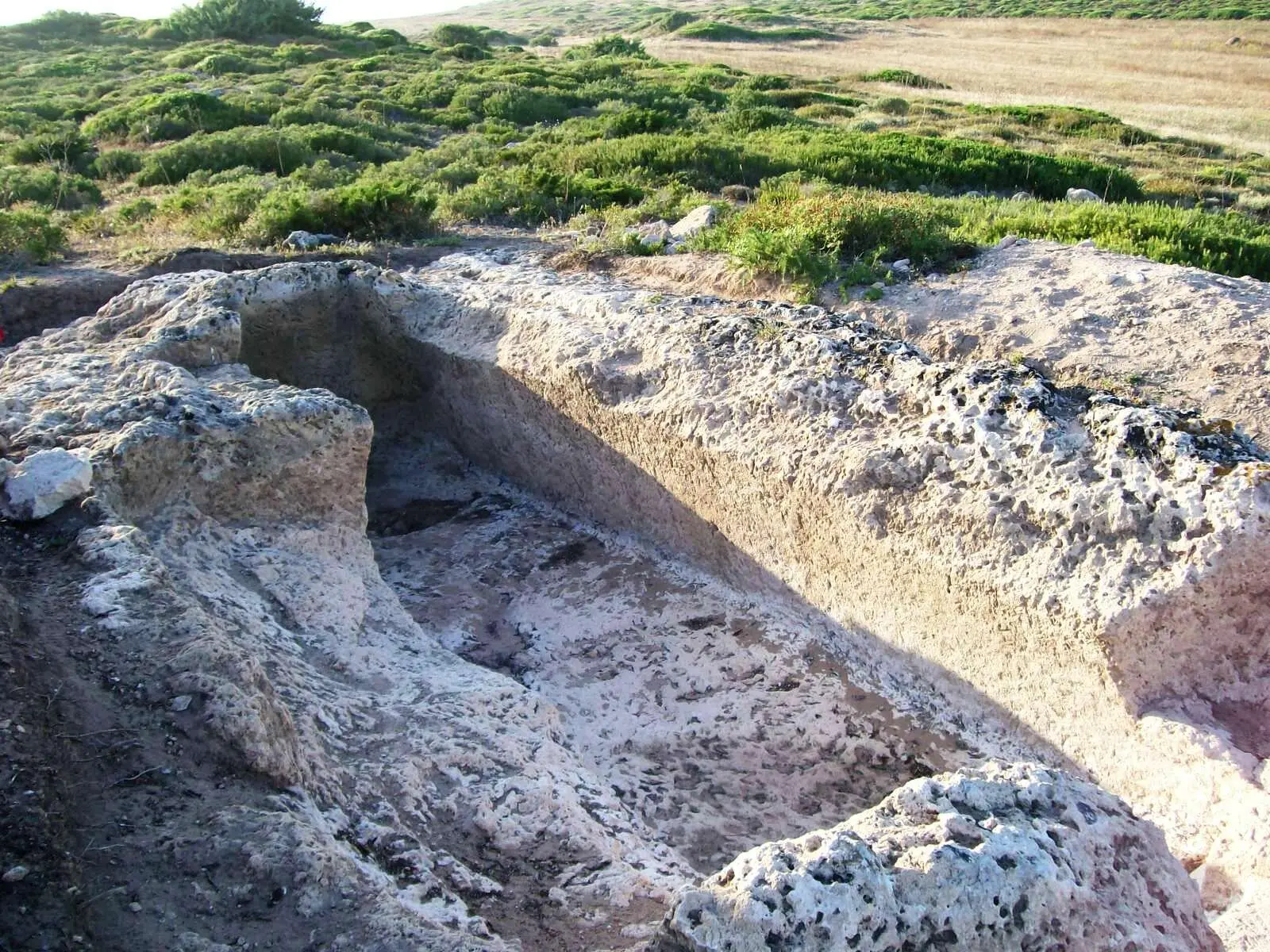
Prehistoric origins
A stone-working workshop is established at Cuccuru Ibba. Remains of circular huts bear witness to the first stable settlements in the area.
Nuragic period
The Nuragic people build the nuraghe of Monti Arrubiu and the settlement of Baccu Tinghinu. The territory is dotted with towers and fortified villages.
The Punic presence
The Carthaginians found the settlement of Su Loi and the necropolis of Sant'Antonio. Capoterra becomes a commercial hub between the hinterland and the coast.
The Roman period
The Romans build an oppidum near the lagoon and a villa with baths and mosaics at Su Loi, discovered in the 1950s by archaeologist Gennaro Pesce. The iron mines at Sant'Antonio attract specialist miners from Thrace. Warehouses with large jars are built near Frutti d'Oro for storing goods.
The pagan sanctuary
A hilltop pagan sanctuary rises at Punta Santa Barbara. In the 1970s, hundreds of Roman coins — of Gallienus, Maximian, Constantine, Constantius II and Theodosius — are found there, along with traces of animal sacrifice.
The church of Santa Barbara
The hermit Praguantino founds the church of Santa Barbara de Montes in Romanesque-Pisan style, with Augustinian hermits. The inscription reads: "In honour of God and the Blessed Martyr Barbara, this church was built in the year of the Lord 1281". Ceramic basins are set into the facade, including proto-majolica from Brindisi and Islamic ceramics from North Africa.
The destruction
The Aragonese viceroy Berengario Carroz destroys Capoterra as reprisal against the revolt of Judge Mariano IV of Arborea. The territory remains depopulated for three centuries.
The wasteland
Historian Giovanni Francesco Fara writes in the Sardinie Corografiam that the territory of the Nora district is "completely deserted and wooded, with wild animals". Only a sporadic monastic presence remains.
The refoundation
Baron Girolamo Torrelas Spiga refounds the settlement under the name "Villa di Sant'Efisio" by means of a Bolla di Mortarelli. The first families arrive from Logudoro and Gallura: Atzori, Dessì, Piras, Perra, Casu, Farigu, Melis, Lecca, Cossu, Boi, Lai.
The first census
The first census records only 7 hearths — about 28 inhabitants in total. Growth will be slow: 156 inhabitants in 1678, 105 in 1688 (after the famine of 1680), 227 in 1728, 377 in 1751.
The barony
On 25 June the barony is granted to Girolamo Agostino Torrella Spiga. A complex baronial succession begins, passing through the Torrellas, the Marquises of Soleminis and the Zapatas, with royal seizures and inheritance disputes.
Administrative reform
On 24 September Charles Emmanuel III establishes the Community Council (5 councillors) and the Board of Proper Men (5 members). Only male landowners may be elected.
The great famine
A severe famine strikes Capoterra. Popular memory recalls it in the saying "su bammi del San Odorcio". The population of around 400 lives by herding and farming in conditions of extreme poverty. The village has only a dozen craftsmen: a blacksmith, a saddler, a cobbler, a builder, a miller.
Autonomous municipality
Charles Albert abolishes feudalism in Sardinia. Capoterra becomes an autonomous municipality, free from baronial control after almost two centuries.
Engineer Gouin and the church
French mining engineer Gouin arrives to explore the iron deposits and acquires the estate of Baccu Tinghinu. The same year, construction of the new parish church begins, which will be completed despite the collapse of some naves during the works.
Sardinia's first railway
A 14.5 km narrow-gauge (600 mm) railway line is inaugurated between the San Leone mine and the port of Maramura. Initially horse-drawn, it is the island's first railway.
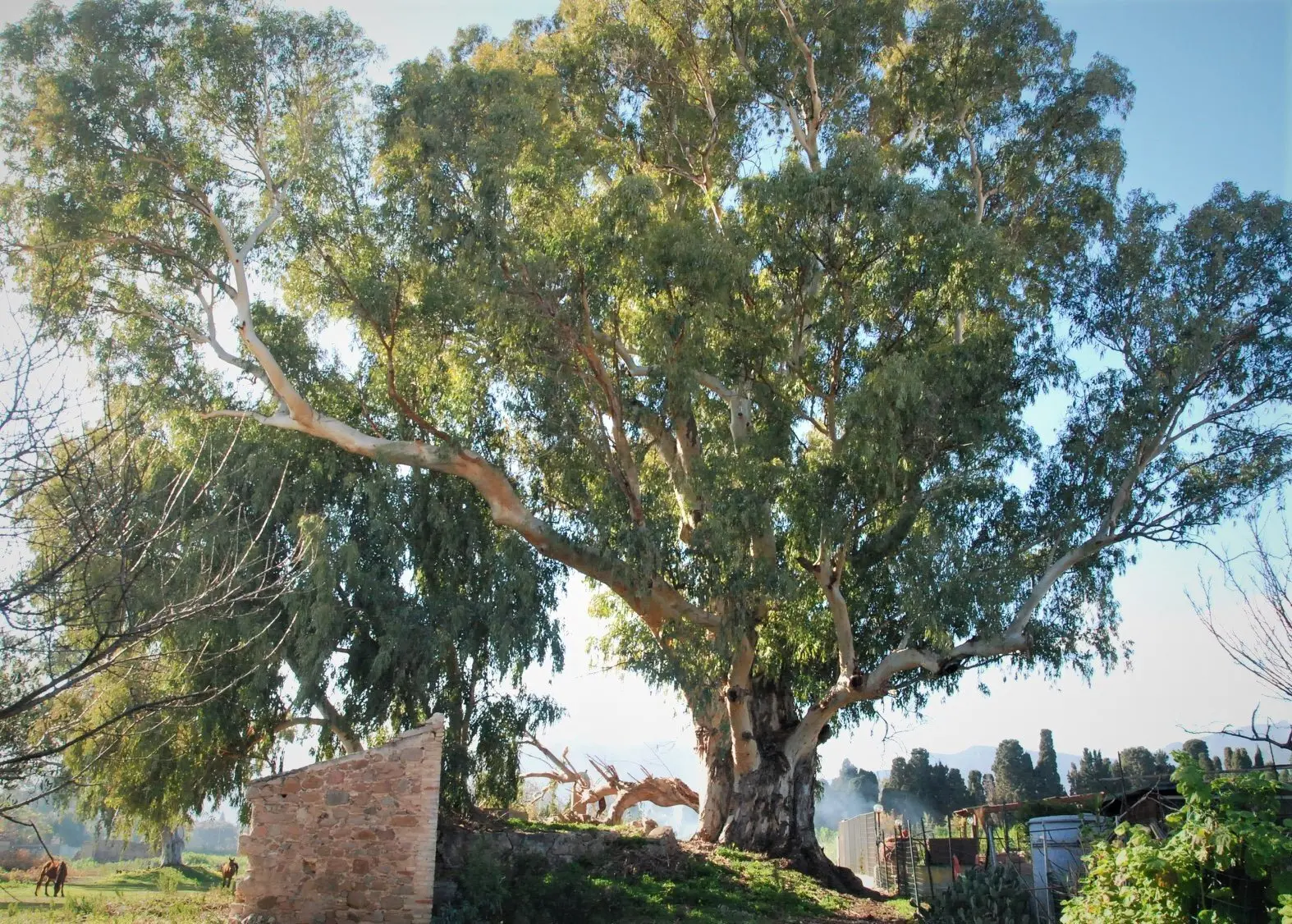
The oldest eucalyptus
Gouin plants in his estate garden what is considered the oldest eucalyptus tree in Sardinia. The tree still exists today.
The flood
A major flood severely damages the parish house and the church. Rector Leka, a charismatic and determined figure who will lead the parish until 1940, undertakes repairs and founds numerous religious associations.
The Zarpata donation
Entrepreneur Zarpata and his wife donate a buildable plot with the ruins of the old church and cemetery to the parish, for the construction of an orphanage and educational centre for children.
The uranium search
The company SOMIREN (ENI Group) conducts surveys at Arcu su Linnarbu, discovering uranium minerals. The deposits are however deemed economically unviable.
The demographic boom
Building expansion creates the coastal strip and the hillside neighbourhood of Poggio dei Pini. The population grows from 4,820 inhabitants in 1951 to over 18,000, one of the highest increases on the island. The chemical industry settles near Santa Gilla, irreversibly transforming the landscape.
Loss of heritage
During construction of the Residenza del Sole, the remains of the medieval church of Santa Maria Maddalena are destroyed. Ceramics and architectural elements are bulldozed into the foundations. Complaints to the heritage authority go unanswered.
The founding families
When Baron Torrelas refounded Capoterra in 1655, he summoned families from different regions of Sardinia. The first surnames in parish records are Atzori, Dessì, Piras, Perra, Casu, Farigu, Canta, Palmas, Melis, Lecca, Cossu, Boi, Lai, Ligas, Porcu, Piano. Many of these surnames are still among the most common in Capoterra today.
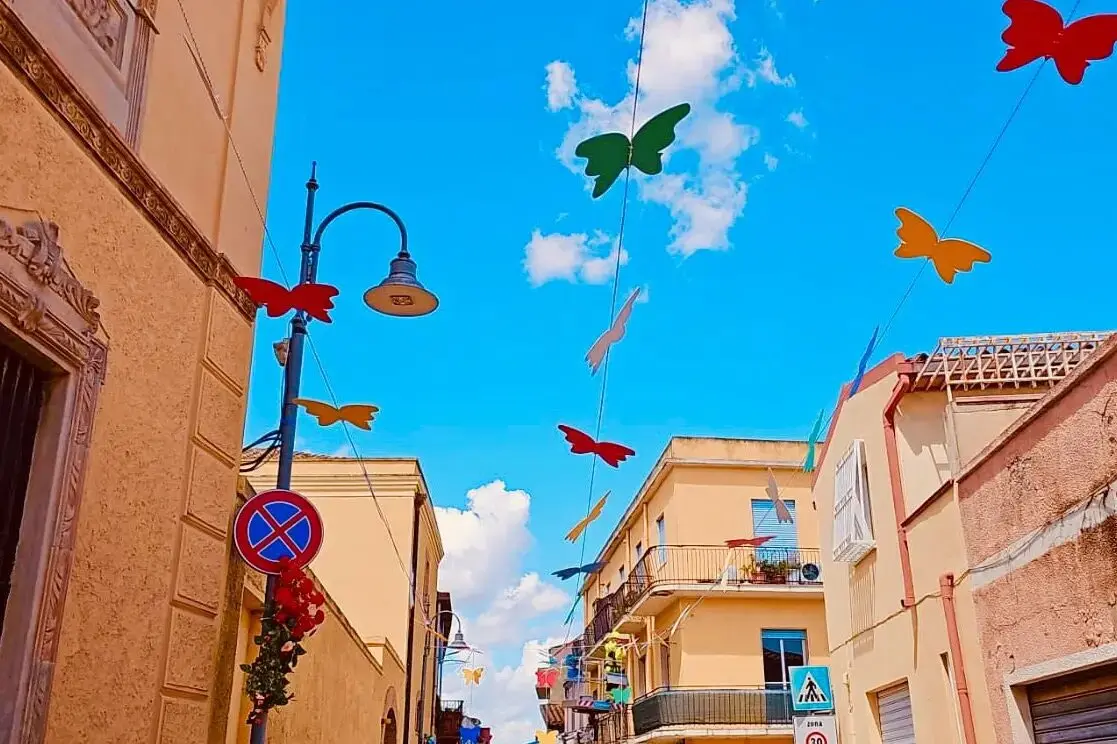
The streets of the first settlement had Sardinian names: Sugaminu (now Corso Gramsci and Via Diaz), Sustrintu de Mesoida (Via Roma), Sugamminu de Subiginao de Susu (Via Indipendenza and Via Santa Barbara). The village expanded northward from the baronial prison, with dirt roads around the church and the baron's house.
The railway and the mines
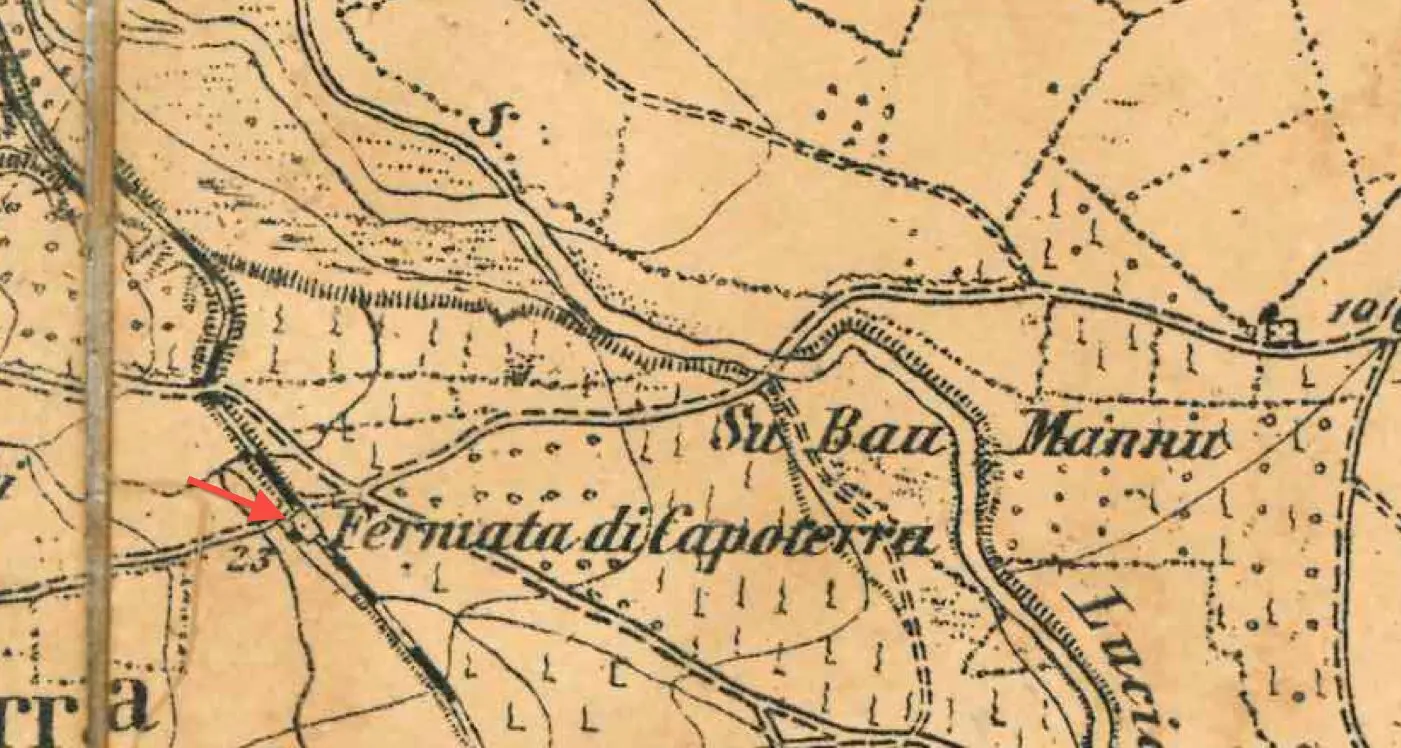
The iron mines at Sant'Antonio were already active in Roman times, when miners from Thrace came to Sardinia for its gold deposits. In the 19th century, the arrival of French engineer Gouin and the construction of the island's first railway (14.5 km of narrow gauge, initially horse-drawn) made Capoterra a centre of mining activity.
Source: Conference "Capoterra 1655-2005 — 350 years of a new history", 2005.
Did you know that...
The oldest eucalyptus tree in Sardinia stands in Capoterra, planted in 1865 by French engineer Gouin.
The island's first railway was horse-drawn — horses pulled the wagons loaded with ore.
The territory was completely uninhabited for 300 years, from 1353 to 1655. In 1580 historian Fara described it as "deserted and wooded with wild animals".
The name "Cabuderra" in Sardinian means "head of the land" — it was the first land after the lagoon on the Roman road connecting Cagliari to Nora.
In the first census of 1656, Capoterra had only 7 hearths: about 28 inhabitants across the entire territory.
Set into the facade of the church of Santa Barbara (1281) are Islamic ceramics from North Africa and proto-majolica from Brindisi dating to the 13th century.
At Punta Santa Barbara, beneath the Christian church, lies a Roman pagan sanctuary with hundreds of coins from the 3rd–5th century AD.
The founding families of 1655 — Atzori, Dessì, Piras, Perra, Casu, Melis, Lecca — carry surnames that are still extremely common in Capoterra today.